The Internet of Things (IoT) continues to evolve rapidly, and 2026 is shaping up to be a breakthrough year for smarter, more connected systems. From a weather satellite viewer and fridge calendar to automated chicken coop doors and pill reminders, each project demonstrates reliable automation with low power operation.
The following builds combine health sensors, ultrasonic modules, LED systems, and 3D-printed enclosures to create practical designs for homes and outdoor use.
These ideas are suitable for electronics engineering students, hobbyists, and makers looking for mobile-friendly IoT applications.
Table of Contents
Weather Satellite Viewer
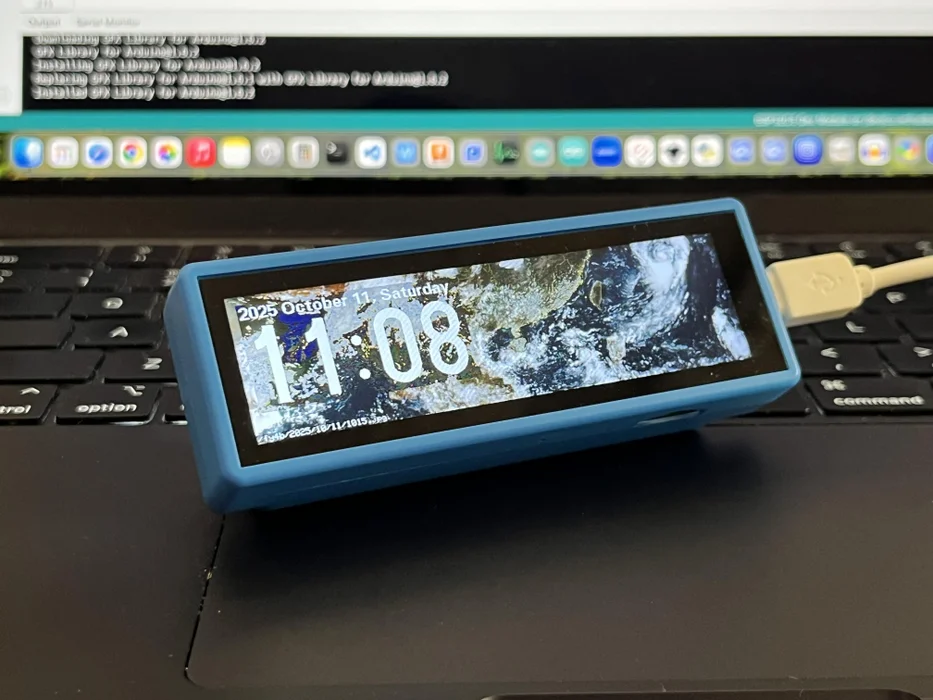
Weather Satellite Viewer displays live Earth images from the FengYun FY-4B geostationary weather satellite launched in June 2021.
An ESP32 board downloads the latest data from the Internet after first obtaining accurate time through an RTC module or a public NTP service. FY-4B releases new images every 15 minutes with about a 45-minute delay due to processing.
Each image is saved on a microSD card in folders organized by date and time. Between download cycles, the ESP32 plays the stored images sequentially to create a smooth time-lapse animation showing cloud movement across Asia. The platform can also be adapted for other satellite feeds to view different world regions.
ESP-DIVE Submarine
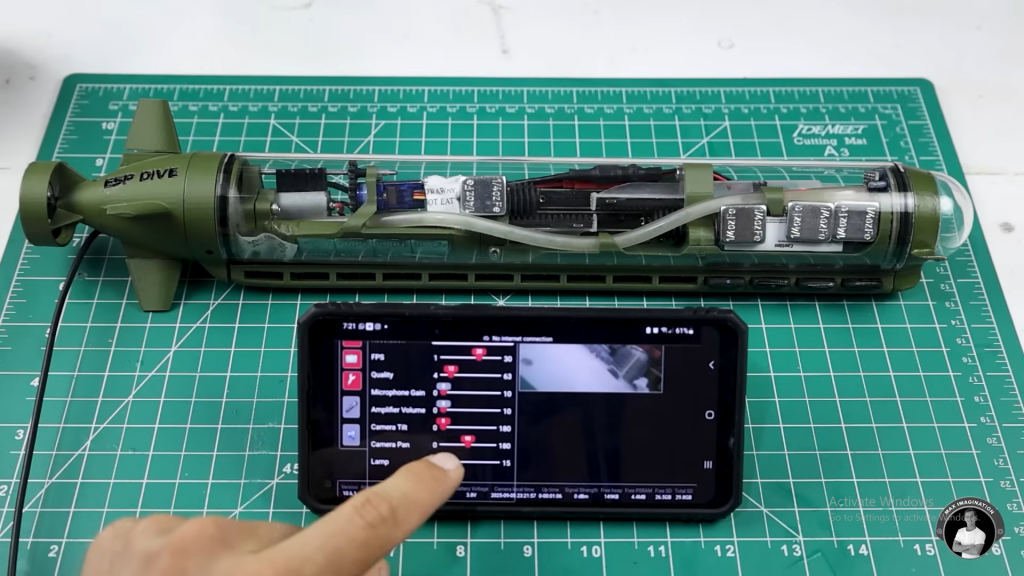
ESP-DIVE is a compact, Wi-Fi-controlled submarine designed to explore underwater environments in first-person view. The body is 3D printed in modular sections and assembled with threaded rods and nuts to maintain a watertight structure. A transparent plastic bottle cap forms the front dome, giving the onboard FPV camera an unobstructed window to capture clear footage.
Three mechanisms manage navigation and depth. A pair of sealed DC motors provide forward and reverse thrust, a servo motor drives the rudder for steering, and a ballast system enables controlled diving. Power comes from a rechargeable lithium battery placed safely inside the main hull.
Through the control interface, operators can view the live camera feed, adjust propeller speed, move the rudder, and fine-tune buoyancy in real time. With neutral buoyancy configured, the submarine can hover steadily underwater, recording video at up to 2048×1536 resolution or switching to 800×600 for faster, responsive handling.
TrailGuard Hiking Band
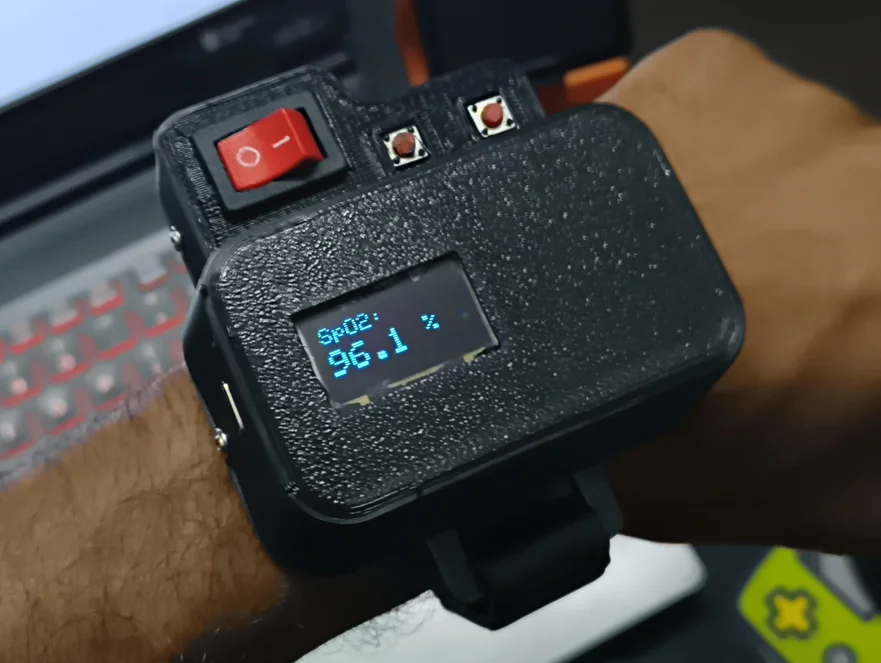
TrailGuard is a smart wearable created for hiker safety. A gyroscope sensor tracks orientation and motion continuously, identifying abnormal impacts as a fall event. When triggered, the ESP32 sends the hiker’s GPS coordinates through the Blynk platform, notifying the guardian via phone and email.
A MAX30102 heart-rate sensor measures pulse and SpO₂ levels, displayed instantly on a small OLED screen. Two physical buttons provide control—one for changing modes and another dedicated SOS key. The SOS command transmits an emergency alert with coordinates once outdoor satellite lock is achieved.
The device operates on an 800 mAh Li-ion battery with Type-C charging, and the components are mounted on a perfboard inside a Fusion 360 designed 3D-printed enclosure. Although the case is slightly bulky due to the ESP32 and GPS module dimensions, the system performs reliably in real conditions.
DIY Wind Gauge

Sebastian introduced a creative DIY Wind Gauge that works without any moving parts. Instead of spinning cups or arrows, the instrument measures wind speed and direction through structural bending, offering greater durability and consistency.
An omnidirectional sail responds evenly to airflow from all sides and is attached to an aluminum tube post. A thin, flexible crossbeam carries four strain gauges, which register tiny resistance changes when stretched or compressed. As wind pushes the sail, the post bends slightly—the stronger the wind, the greater the bend.
By monitoring this deformation in two perpendicular axes, north-south and east-west, the controller calculates both wind speed and direction with high precision. The approach eliminates mechanical wear and provides a more reliable method for outdoor measurement.
DIY Smart Energy Meter
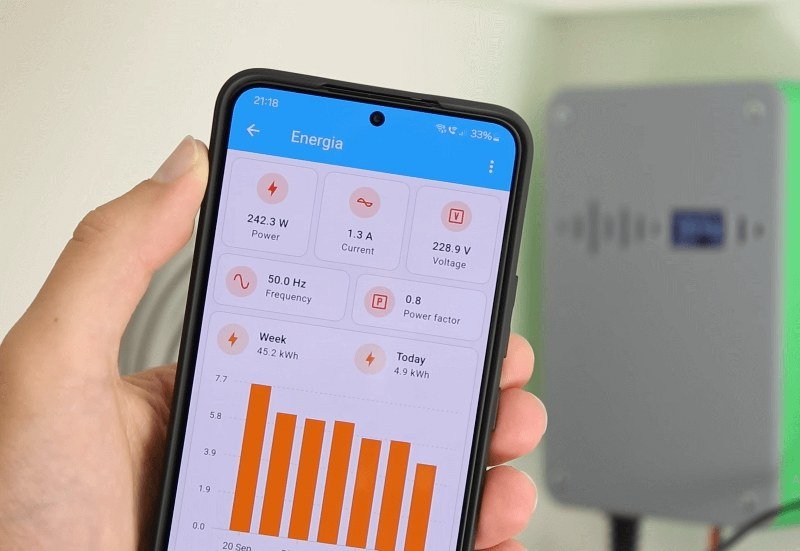
Giovanni’s DIY Smart Energy Meter monitors household electricity usage in real time. The goal is giving users a clear picture of instantaneous power consumption as well as historical trends across days, weeks, and months.
The hardware uses a current clamp and transformer to measure voltage, current, frequency, and power factor, converting the information into watt-hours. An ESP32 microcontroller processes these readings and sends them via WiFi to the Home Assistant app, where interactive graphs illustrate consumption behavior.
A compact 3D-printed case provides a professional finish, and a small onboard display shows live measurements along with the WiFi connection status. The clamp fits over existing cables, so the meter operates without disconnecting any part of the electrical system.
Smart Pill Dispenser – IoT Medication Reminder System
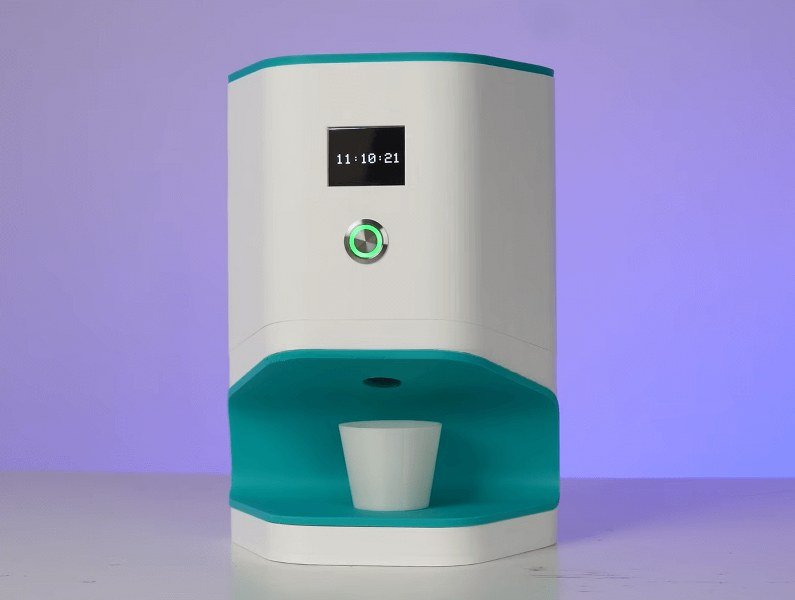
The Smart Pill Dispenser automates daily dose scheduling and ensures reliable medication management at home. A companion web app interface lets users label each pill type, configure the number of tablets per dose, and store precise reminder times using a structured calendar format.
After the medicines are placed inside their individual compartments, the device monitors the routine continuously without requiring manual logs. At the core lies the Photon 2 microcontroller, which handles stepper motor actuation, Wi-Fi synchronization, and cloud notifications.
A clear 2-inch WaveShare IPS display shows real-time status, upcoming schedules, and battery health, while a metallic LED push button allows secure manual dispensing. The firmware tracks accurate time through an RTC module or public NTP service and compares it with stored settings.
When the button is pressed within the valid dose window, and the pills have not been released earlier, the controller activates the stepper system to drop the correct tablets into the tray. Requests outside the window remain blocked, preventing accidental or premature use.
Regular alerts through the app provide accuracy, safety, and peace of mind, making the dispenser suitable for EE student IoT and healthcare automation projects.
Smart Chicken Coop Door
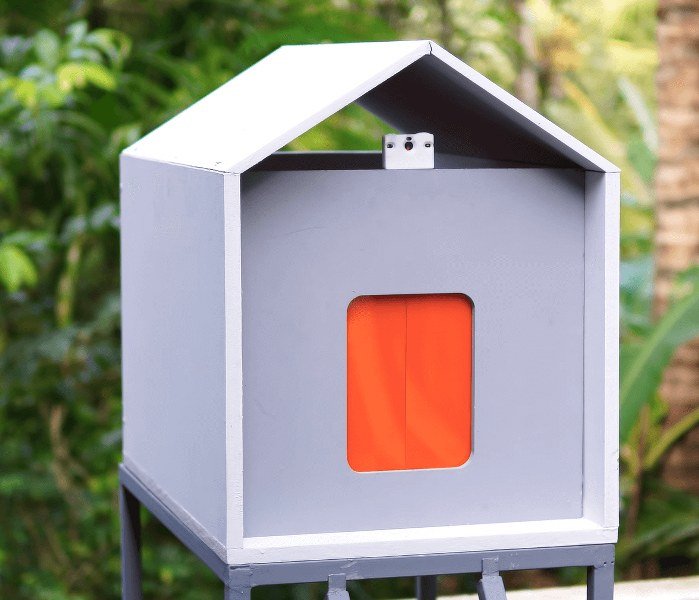
The Smart Chicken Coop Door automates feeding, predator detection, and daily door operation directly from a smartphone. A split-door mechanism driven by a NEMA 17 stepper motor and GT2 timing belt slides one panel open while the other closes for synchronized movement on an MDF frame.
Security is handled by HuskyLens, an AI vision sensor trained to detect predators like raccoons or foxes. Once a threat is recognized, the Arduino receives the alert via I²C and immediately triggers email notifications.
Feeding is managed through two identical auger feeders powered by continuous-rotation servo motors, dispensing food on demand. The multiple feeders improve reliability and ensure the coop runs safely even when users are away.
AI-Powered Fault Diagnostic System
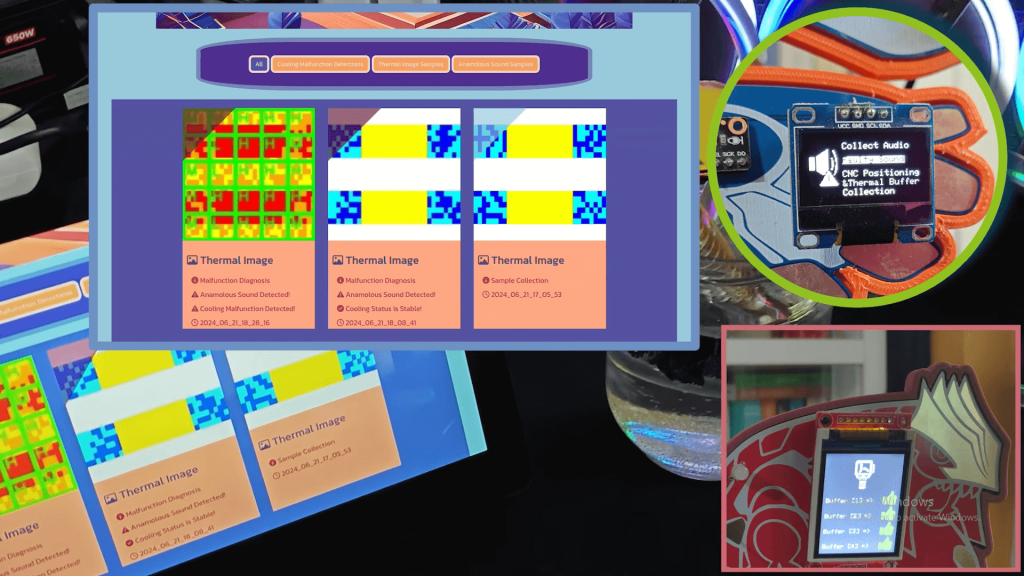
This AI-powered fault diagnostic system is modeled after a closed-loop PC water-cooling arrangement. The platform uses a thermal camera to scan temperature distribution and a neural network to analyze fan sound patterns, since unusual noise often signals friction or imbalance.
A visual anomaly detection model compares live thermal images with normal operating references to spot heat hotspots or uneven cooling. Together, these inputs help the AI determine where and why malfunctions occur.
All data is shown on a web dashboard, which logs updates and sends SMS alerts whenever abnormalities are confirmed. The system demonstrates how machine learning can supervise critical cooling infrastructure proactively.
IoT Command Gateway Smartwatch
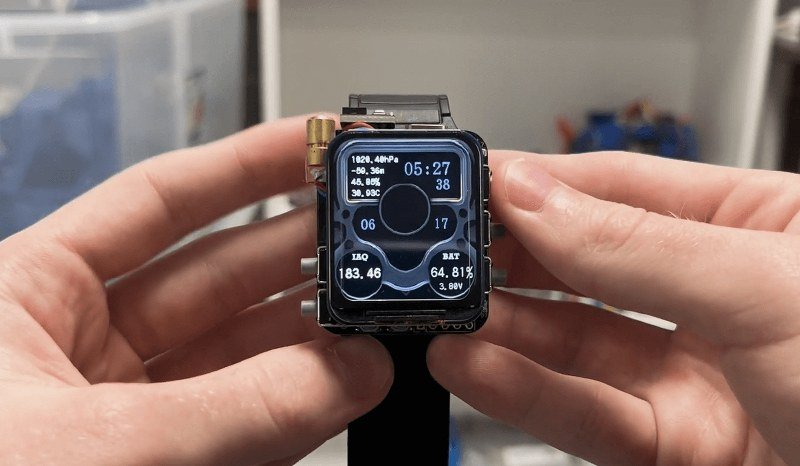
Gateway Smartwatch acts as a portable command center for ESP-based IoT devices. It offers high-precision timekeeping, tilt-to-wake, proximity sensing through a LiDAR-style module, and customizable hotkeys to trigger actions like unlocking doors or switching lights.
The MAC addresses can be changed instantly, allowing connection to multiple ESP devices on the fly. A quick 43-minute USB-C recharge prepares the watch for extended operation again.
Light Pollution Meter
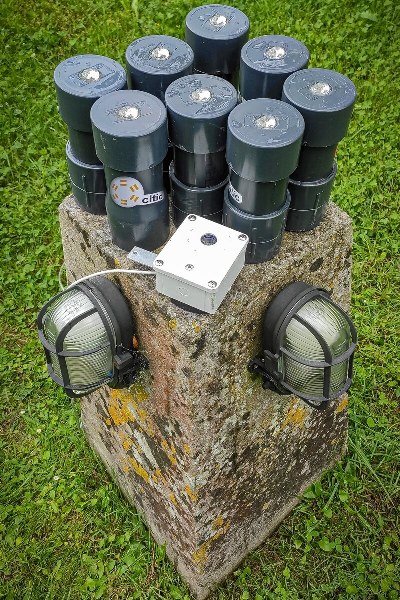
Light Pollution Meter guides users in building an affordable DIY dark-sky brightness instrument capable of producing scientifically useful measurements.
Instead of costly commercial meters, the maker selected an ESP32-C3, valued for low power consumption and integrated Wi-Fi. The controller reads a sensitive light sensor aimed toward the sky and also logs temperature and humidity, since haze and moisture influence night-brightness results.
All collected data is transmitted via MQTT to a remote server for storage and long-term graphing. Outdoor trials demonstrated strong correlation with readings derived from ESA’s Gaia satellite, proving that hobby-level hardware can achieve impressive accuracy.
Powered by a rechargeable battery and enclosed in an open-source 3D-printed Fusion 360 case, the unit can operate continuously through entire nights, tracking the effect of street lighting and seasonal changes. With a build cost under $65, the project becomes accessible for astronomy education and environmental monitoring.
Fridge Calendar
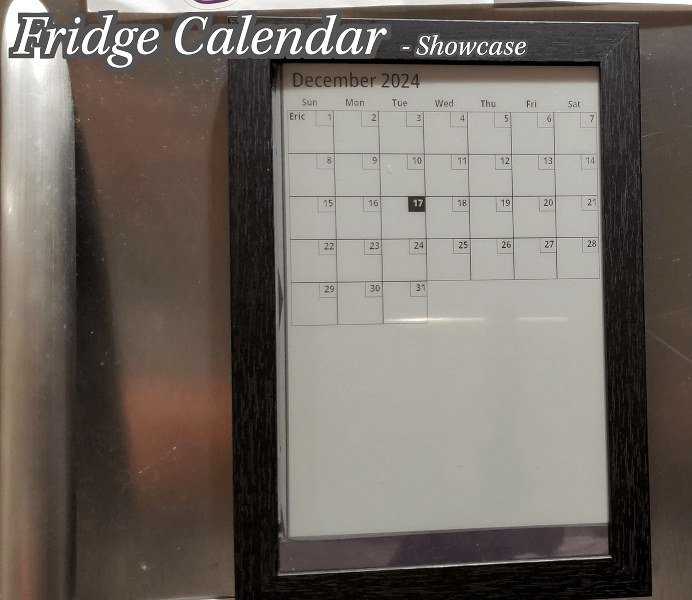
Smart Fridge Calendar presents a practical method for transferring cloud-based scheduling information onto a dedicated low-power display inside the home.
The maker used a 9.7-inch WaveShare E-Paper panel with 1200×825 resolution, chosen for its sharp daylight readability and extremely small energy demand compared with conventional LCD screens. To conserve battery life, the ESP32 microcontroller remains in deep sleep mode most of the day.
At midnight, it wakes, connects to Wi-Fi, and communicates with Google Calendar through the official API to fetch up to six upcoming events including titles and dates. The firmware then renders the data one entry at a time, avoiding full-screen flashing and giving a smooth paper-like refresh effect.
All electronics are housed in a modified picture-frame enclosure that mounts magnetically on the refrigerator door like an ordinary family calendar. The project shows how e-paper and web APIs can replace printed planners while keeping shared schedules clearly visible.
Smart Circuit Breaker – Wi-Fi Controlled Home Protection
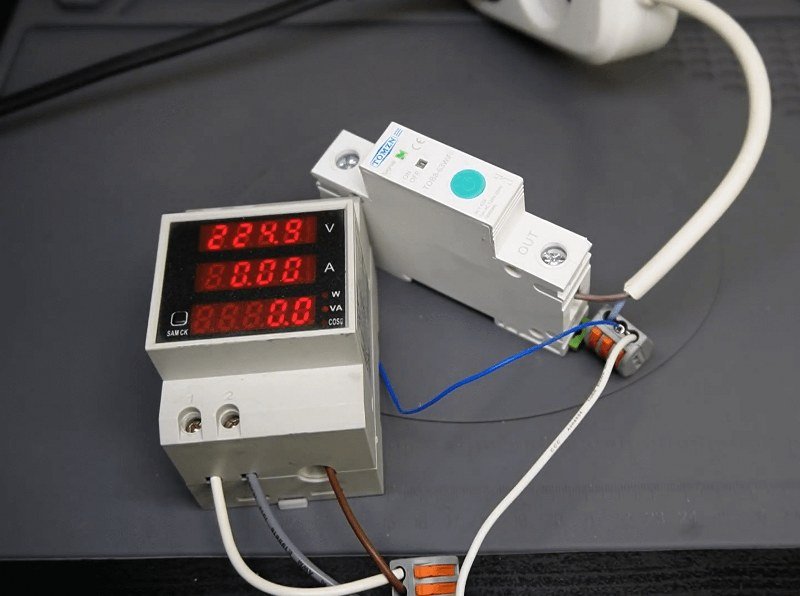
The Smart Circuit Breaker replaces conventional manually operated breakers with connected, app-controlled hardware. Wi-Fi enabled switching modules allow remote operation through smartphones and voice assistants, giving users the ability to turn appliances on or off from any location.
The system becomes especially useful during winter when outdoor infrastructure such as drainage wells and water pumps remain difficult to inspect because of heavy snow and limited access. A failure of the drainage pump can permit surface water to seep beneath the building foundation, creating long-term structural damage.
With the new design, the microcontroller dashboard tracks the pump performance and energy consumption continuously, ensuring that the equipment operates within safe limits. The setup was later expanded to include a hot-water boiler, using the breaker’s built-in timed cut-off feature that disconnects power automatically after a preset interval.
This function prevents overheating, overload, and unnecessary electricity usage when devices are left running by mistake. The compact retrofit solution requires no major rewiring since the clamp-style installation fits directly over existing cables.
Magic Mirror – Raspberry Pi Information Hub
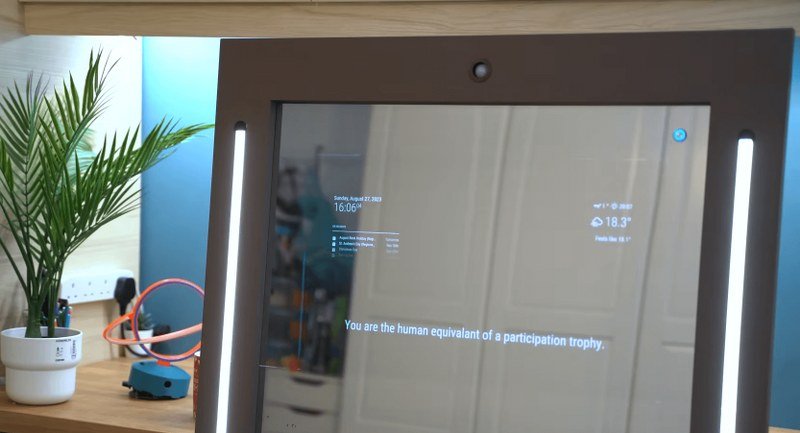
Lewis’s Magic Mirror project transforms an ordinary mirror into a hidden digital assistant. A 21-inch display sits behind a two-way reflective panel, allowing light from the screen to pass through while still preserving a normal mirror appearance.
The electronics are housed inside a precision-cut wooden frame that gives the device a clean Paris-apartment aesthetic suitable for interior decoration on Pinterest and YouTube showcases.
At the core is a Raspberry Pi, which gathers cloud data and updates the date, time, weather statistics, and Google Calendar events in real time. A motion sensor wakes the interface only when someone enters the room, keeping the system energy-efficient.
An ambient light module adjusts brightness automatically for clear visibility day or night without glare around the desk surface. Optional voice control integration lets the mirror respond to spoken commands and operate as a gateway for other ESP-based IoT projects such as lights and smart locks. Every component was assembled methodically to ensure smooth scrolling graphics and gradual refresh effects similar to Ezoic featured builds.
ECG Device – Portable Low-Cost Heart Monitor
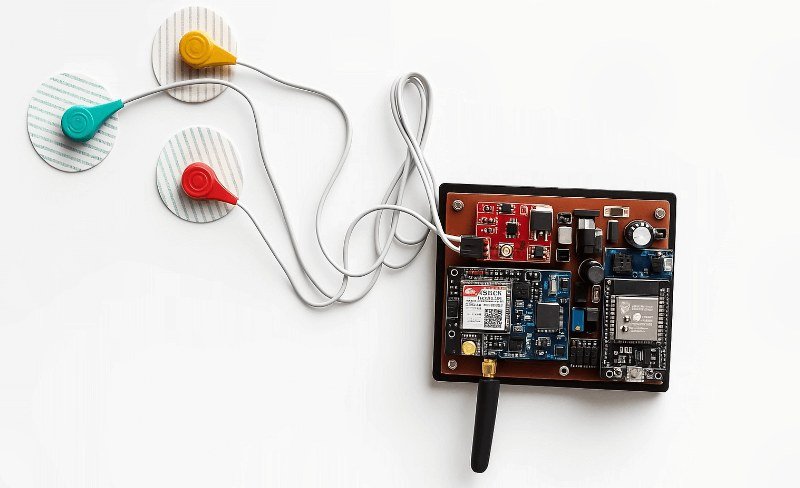
This compact DIY ECG device demonstrates how hobby-level components can approach medical-grade results. An AD8232 ECG sensor captures the heart’s electrical signals through simple electrode connections, and an ESP32 microcontroller processes and streams the waveform wirelessly to smartphones or computers.
The design emphasizes portability and Fusion-style modular assembly, powered by an 800 mAh lithium-ion battery with Type-C charging and a structured 3D-printed enclosure. Despite the minimal component count, the firmware reliably records clean ECG waveforms and can even flag irregular patterns such as arrhythmias using onboard algorithms.
The entire platform is open-source and affordable at around $65, making it suitable for EE students, IoT research projects, and electronics forum discussions without bulky equipment. The system can integrate with MQTT or Blynk dashboards to log long-term pulse trends similar to MAX30102 perfboard wearables.
This project offers beginners confidence in biomedical electronics and encourages replication for outdoor or home-assistant gateways.
AI-Powered Diagnostic System – Smart HVAC Supervisor
The AI-powered diagnostic system monitors water-based HVAC cooling setups before faults become critical. A thermal camera scans pipes, radiators, and aluminum blocks to capture temperature distribution, while a neural network analyzes fan sound patterns, since unusual noise often indicates friction, imbalance, or motor failure.
Aktar demonstrated the concept using parts from PC closed-loop water-cooling systems—pump, plastic tubing, aluminum radiator, and a custom 3D-printed coolant tank—assembled in a Fusion 360 style frame. Because no public datasets were available, the creator simulated hardware failures and trained two machine-learning models to recognize overheating and acoustic anomalies.
A structured web dashboard manages incoming data, runs the models, logs updates, and sends SMS alerts when something goes wrong, following the same notification approach as smart circuit breakers and light-pollution meters.
The design contains no moving wear parts apart from sealed motors, making it reliable for continuous home operation and adaptable to other IoT diagnostic niches.
